
VIP member
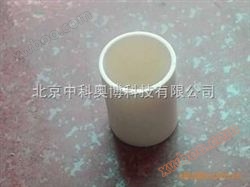
Zirconia crucible
Zirconia crucible has a purity of 99.9, a density of 6.00, and a high operating temperature of 2200 degrees. It is mainly used for melting precious me
Product details
40 * 40mm zirconia crucible
Preparation: Various non-standard shaped zirconia crucibles can be customized according to user needs!
Zirconia ceramic crucible
The purity reaches 99.9, the density is 6.00, and the highest operating temperature is 2200 degrees. It is mainly used for melting precious metals and has good heat stability. The main purpose is to melt precious and rare metals. It has good high-temperature stability and is an ideal experimental high-temperature refractory product.
Zirconia has a higher melting point than zirconium, reaching 2700 ℃, and is one of the refractory materials in nature. It has poor thermal conductivity, but strong electrical conductivity and corrosion resistance. Even when heated to over 1900 degrees Celsius, it will not react with molten metals such as aluminum, iron, nickel, platinum, silicates, and acidic slag. Therefore, it can be used to make Manufacturing crucibles, refractory tubes, heat-resistant glass, and heat-resistant enamel for melting precious metals. Adding zirconia to enamel and glass can enhance their resistance to acid and alkali corrosion. A high-temperature furnace lined with zirconia will not experience a significant increase in volume after heating, and temperature changes have little impact on it. The furnace body will not crack due to thermal expansion and contraction, which can greatly extend the service life of the furnace. Using zirconia as a refractory material and adding 5% calcium oxide as a stabilizer, its heat resistance temperature is 500 degrees higher than that of alumina, and its insulation ability is three times higher than before the addition. Mixing white zirconia into ceramics can make them whiter, brighter, more heat-resistant, and increase their strength. Using this type of ceramic to manufacture high-temperature insulating porcelain bottles has strong insulation ability and a small coefficient of expansion. Quality and reputation are our pursuit!
Product Introduction
It is mainly used for burning pigments, colorants, melting blocks, pigments, luminescent materials and other optical glass in shuttle kilns and push plate kilns. It can also be used for the analysis and firing of rare earth mineral raw materials, the firing of high-temperature products such as ceramic powders, and the melting of precious metals and alloys such as platinum, rhodium, iridium, etc.
Technical Specifications:
project |
|
ZrO2 |
density |
g/cm3 |
6 |
flexural strength |
MPa |
1000 |
compressive strength |
MPa |
3000 |
modulus of elasticity |
GPa |
200 |
impact resistance |
MPa·m1/2 |
8 |
Weibull model |
m |
22 |
Vickers hardness |
HV0.5 |
1300 |
thermal conductivity |
W/mk |
<2 |
Zui High Operating Temperature |
℃ |
2200 |
Volume resistance 20℃ |
CM |
>1013 |
coefficient of thermal expansion |
X10-6/K |
10 |
melting point |
℃ |
2700 |
Mohs hardness |
7 |
Advantages of zirconia:
1.Anti burning, high thermal conductivity.
2.Ultra low coefficient of expansion.
3.Good high thermal stability.
4.Long service life, especially suitable for rapid cooling and heating.
6.Fast thermal conductivity, low energy consumption, and reduced energy consumption.
8.Inner wall gloss, no powder sticking, reduced rare earth polishing amount.
Characteristics of zirconia:
1High fire resistance
2Resistant to erosion
3Corrosion resistance
4High hardness
Online inquiry
-
Contacts
-
Company
-
Telephone
-
Email
-
WeChat
-
Verification Code
-
Message Content
-