VIP member
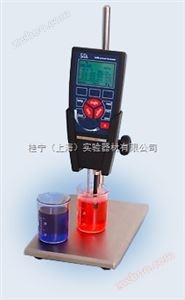
Sita surface tension meter
Application field: Used for measuring liquid surface tension meter Description: This surface tension meter is specifically designed for continuous mon
Product details
Working Principle:
Through the built-in precision air pump, bubbles are blown out, and the precision air valve controls the lifespan of the bubbles (i.e. the time they exist). The pressure sensor transmits the pressure signal of the bubbles connected to the liquid to the system, and the temperature sensor transmits the temperature signal of the liquid to the system through a temperature sensing rod. After analysis by the system, the surface tension value, temperature, and bubble lifespan data are displayed.
structure
Precision air pump, precision air valve, temperature sensor, pressure sensor, data transmission system, display screen, among which the air pump, temperature sensor, data transmission system, and pressure sensor are all built into the instrument.
Three powerful functions
△ Independent Mode - Rapid Quality Monitoring
Fast and reliable quality control mode. After setting the measurement parameters, the surface tension value can be accurately measured and displayed.
△ Automatic mode - the ideal tool for research and development
Being able to independently set the measurement range, number of test data, and average measurement value is an ideal tool for research and development.
Online mode - easy to monitor the process
The T15 surface tension meter has a continuous monitoring mode specifically designed for use in the production process. Users can easily adjust measurement parameters.
Characteristic features:
Three measurement modes (independent, automatic, and online) - suitable for different testing requirements.
Easy to operate and convenient to test.
Automatic control of surface time (bubble life) - no need for on duty observation.
Setting parameters in advance can effectively avoid measurement deviations caused by improper usage.
The optional process transmission provides convenience for continuous monitoring and analysis.
The measured value can be compared with other SITA surface tensiometers.
Technical Specifications:
Three measurement modes
△ Surface tension measurement range: 10-100 mN/M
△ Reading accuracy: 0.1 mN/M
△ Reproducibility: 0.5 mN/M
△ Bubble lifespan control: 15-15000 ms, accuracy 5%
△ Temperature measurement range: 0-100 ℃, reading accuracy of 0.1 ℃, accuracy of 0.1 ℃.
△ USB interface, providing instrument operation and data transfer to computer.
△ Process transmission (optional) can convert the measured surface tension and temperature values into external signals and transmit them to the PLC for reception.
△ Weight 270g, size 75x168x35mm
△ Probe length 68mm
△ Visible and audible measurement status signals
Purpose:
Used in the research and development of products for inkjet ink, cleaning agents, surfactants, alcoholic beverages, and petroleum industries, and for controlling the cleaning effect of precision electronic workpieces. By testing the surface tension of liquids, the concentration of surfactants and the wetting and leveling properties of liquids can be determined.
Test method:
Bubble pressure method:
Through the attraction between liquid molecules, air bubbles inside the liquid will also be affected by these attractive forces, such as being squeezed by surface tension when bubbles form in the liquid. The smaller the radius of a bubble, the greater its overall pressure. The increased pressure compared to external bubbles can be used to measure surface tension. Air enters the liquid through capillaries, and as bubbles form outward protrusions, the radius of the bubbles continuously decreases.
During this process, the pressure will rise to the maximum value and the bubble radius will decrease. At this point, the radius of the bubble is equal to the radius of the capillary tube, and the bubble forms a hemispherical shape. Afterwards, the bubbles burst and detach from the capillary, and new bubbles continue to form. By depicting the characteristic curve of bubble pressure during the process, we can use it to calculate the surface tension.

Product image display:

Online inquiry
-
Contacts
-
Company
-
Telephone
-
Email
-
WeChat
-
Verification Code
-
Message Content
-