
VIP member
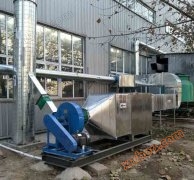
Purification plan for odorous gases in sewage treatment plants
For an introduction to the purification and removal plan for odorous gases in sewage treatment plants, please consult us at (15720490226).
Product details
For an introduction to the purification and removal plan for odorous gases in sewage treatment plants, please consult us at ().
In the process of sewage treatment, a certain amount of harmful and odorous gases are usually produced, which have a certain impact on the factory area and surrounding environment. The harmful and odorous gas components generated during the sewage treatment process may vary depending on the quality of the sewage and the treatment process of the sewage treatment plant.
In the process of sewage treatment, a certain amount of harmful and odorous gases are usually produced, which have a certain impact on the factory area and surrounding environment. The harmful and odorous gas components generated during the sewage treatment process may vary depending on the quality of the sewage and the treatment process of the sewage treatment plant.
The odorous pollutants generated by urban sewage treatment plants mainly include high concentration inorganic gases such as ammonia and hydrogen sulfide, as well as some complex low concentration odorous volatile organic compounds.
Based on our company's years of experience in industrial waste gas treatment, we have developed a relatively mature waste gas treatment plan for the treatment of various odorous gases mentioned above. Practical cases have proven that this plan has the advantages of high purification efficiency, long-term safety, stable operation, and simple operation, achieving the goal of improving the working environment and factory environment.

Purification plan for odorous gases in sewage treatment plants:
Based on the principles of safety, reliability, high processing efficiency, and ease of operation, water film adsorption, UV photocatalytic oxidation, and activated carbon adsorption are used to treat the above-mentioned odorous gases.
Using a combination of photocatalysis and rinsing, a photocatalytic module is formed by covering the outer periphery of the ultraviolet lamp tube with a photocatalyst mesh in the photocatalytic device, allowing the odorous gases entering the interior of the cover to fully contact the inner wall of the photocatalyst mesh, thereby extending the photocatalytic time and path; And by alternately setting titanium photocatalytic modules, specific airflow channels are formed inside the device, which also extends the photocatalytic time and gas flow path, enhances the strong deodorization and sterilization ability of the device, and improves the removal efficiency of hydrogen sulfide, ammonia, volatile organic compounds, and odor concentration in odorous gases.
Introduction to the purification process of odorous gases in sewage treatment plants:
Introduction to the purification process of odorous gases in sewage treatment plants:
1) Using a pipeline collection system, the odorous exhaust gases from each unit are directed to the main pipeline. Through the main pipeline, the exhaust gases are sequentially directed to the water membrane adsorption filtration equipment for pre-treatment of acidic or alkaline substances that are easily soluble in water in the exhaust gases;
2) After treatment, the remaining exhaust gas is further oxidized and decomposed by the UV ultraviolet beam of the photocatalytic equipment, allowing odorous compounds to react with ozone under high-energy ultraviolet beam irradiation to generate low molecular weight compounds such as CO2, H2O, etc;
3) Afterwards, the low concentration exhaust gas is further purified by activated carbon adsorption, and the odorous gas is purified and discharged into the atmosphere through the exhaust pipe to improve the workshop environment.
Biological deodorization technology for treating odorous gases in urban sewage treatment plants
Biological deodorization technology refers to the method of using the physiological metabolism of microorganisms to degrade odorous substances under suitable environmental conditions, in order to remove odors. The mechanism of biological purification of odorous gases was initially proposed by Dutch scholar Ottengraf [1], known as the "absorption biofilm" theory. This theory suggests that biological treatment of exhaust gas generally involves three steps: (1) pollutants in the exhaust gas diffuse from the gas film into the liquid film; (2) The pollutants dissolved in the liquid film further diffuse into the biofilm under the promotion of concentration difference, and are adsorbed and absorbed by the microorganisms inside; (3) The pollutants entering microbial cells are decomposed and utilized as nutrients and energy in the metabolic process of microorganisms, and the pollutants are removed.
Online inquiry
-
Contacts
-
Company
-
Telephone
-
Email
-
WeChat
-
Verification Code
-
Message Content
-