
VIP member
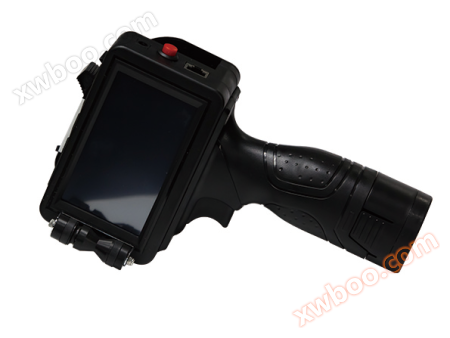
Inkjet printer, manufacturer, choose Rongsu Technology for excellent quality
A coding machine is a device controlled by software that uses non-contact methods to identify products.
Product details
-
Inkjet printerIt is a device that uses non-contact methods to identify products through software control. Generally refers to Continuous Inkjet Printer, abbreviated as CIJ. The theory of inkjet printers was invented in the late 1960s and commercial inkjet printers were not produced until the late 1970s. Principle classification 1: Continuous Inkjet Printer: Under the pressure of the ink supply pump, ink flows from the ink tank through the ink path pipeline, adjusts the pressure and viscosity, and enters the spray gun. As the pressure continues, the ink is ejected from the nozzle. When the ink passes through the nozzle, it is broken into a continuous string of ink droplets with equal spacing and size by the action of the piezoelectric crystal. The ejected ink flow continues to move downward and is charged through the charging electrode, where the ink droplets are separated from the ink line. A voltage is applied to the charging electrode, and when the ink droplet separates from the conductive ink line, it instantly carries a negative charge proportional to the voltage applied to the charging electrode. By changing the voltage frequency of the charging electrode to be the same as the frequency of ink droplet breakage, each ink droplet can be charged with a predetermined negative charge. Under continuous pressure, the ink flow continues to move downward, passing through the middle of two deflection plates with positive and negative voltages respectively. Charged ink droplets will deflect when passing through the deflection plate, and the degree of deflection depends on the amount of charge carried. Non charged ink droplets do not deflect and continue to fly downward, flowing into the recovery pipe and finally returning to the ink tank for recycling through the recovery pipe. Charged and deflected ink droplets fall onto objects passing in front of the vertical nozzle at corresponding speeds and angles.
Online inquiry
-
Contacts
-
Company
-
Telephone
-
Email
-
WeChat
-
Verification Code
-
Message Content
-