
VIP member

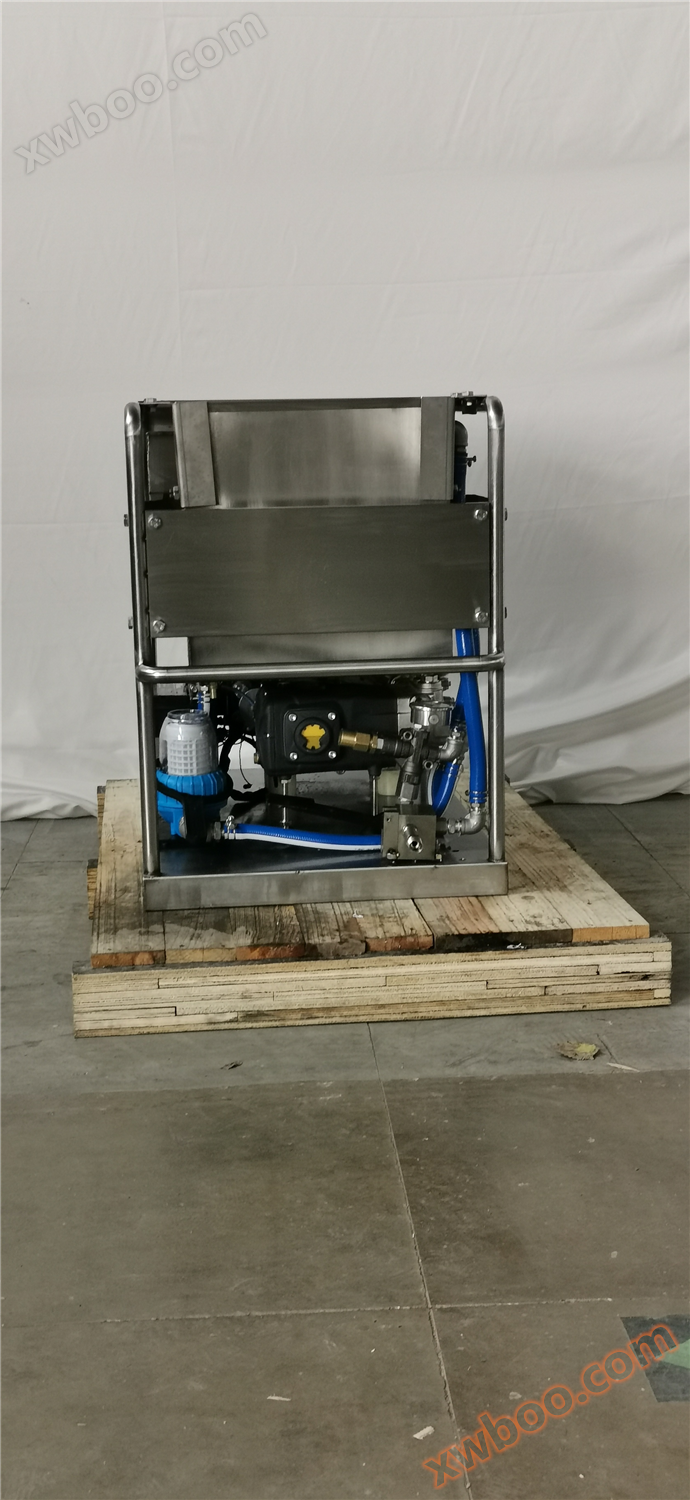
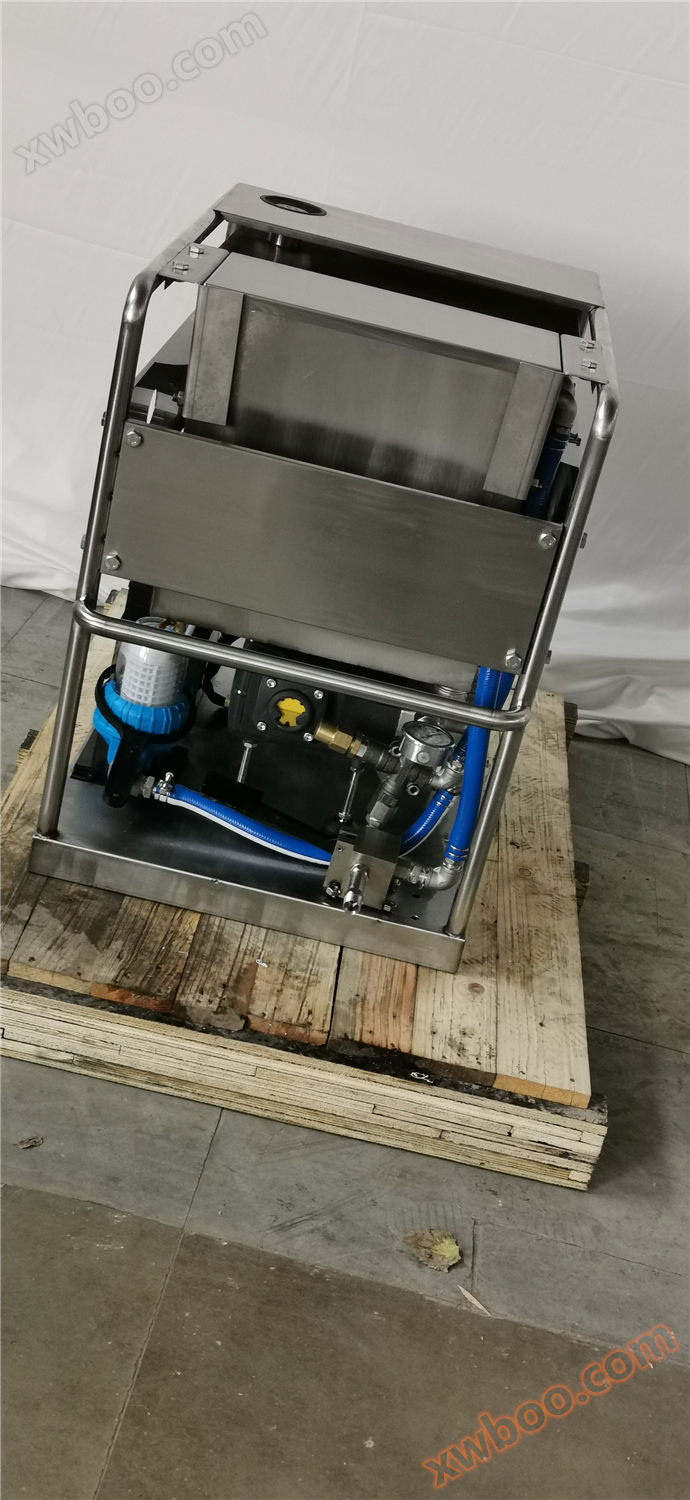
Honda Power 500kg Pressure Cleaning Machine
Honda Power 500kg Pressure Cleaning Machine
Product details
High pressure water cleaning technology is a type of physical cleaning technology that utilizes the impact power and flushing ability of water to carry out cleaning operations.
Due to the fact that the hardness and strength of dirt are usually smaller than those of the attached body, and the high-pressure water energy is transmitted at the moment of impact, designing a good cleaning operation method and combining water cleaning elements are the key to achieving the ideal cleaning purpose.
High pressure water cleaning is mainly used for cleaning work, life, and production environments, as well as removing surface dirt, oil scale, salt rock scale, water scale, and ash scale from production tools, equipment, and objects in factories, workshops, construction sites, pipelines, industries, and other industrial enterprises.
High pressure water cleaning is currently the best alternative technology for mechanical cleaning, alkaline boiling process, and chemical cleaning, which is beneficial for improving operational efficiency and protecting the environment
The seven water cleaning elements of high-pressure water cleaning are composed of pressure, flow rate, temperature, time, cleaning agent, spraying method, and abrasive type and method. Their functions are as follows
Pressure:Representing the strength of water impact, it plays an absolute role in determining whether dirt and debris can be destroyed and removed; Represents clearing power.
Traffic:Representing the ability of water erosion, it is the frequency of erosion under a certain water impact force; Represents clearance efficiency.
The combination of pressure and flow rate represents the size of cleaning ability. The material strength of the pump determines its pressure resistance, and the flow rate is determined by the water power of the pump.
For the effect of dispersing dirt, the impact pressure has a much greater impact than the impact force.
Impact pressure is the pressure (bar) at which water is sprayed onto the cleaned surface. The impact pressure depends on the spray distance, spray angle, nozzle pressure, and flow rate, while the nozzle pressure depends on the flow rate and nozzle size.
When the water flow rate is low, the sprayed fluid is largely fragmented, making it difficult to quickly remove dirt even under high water pressure, and even loose dirt cannot be completely cleaned.
But if the water flow is large and the anti impact force is strong, the operator is prone to fatigue, and some may even be unable to grasp the gun or stand still. A large flow directly brings about high power, which requires the carrying capacity of the power supply, and the increase in water flow and sewage discharge also need to be considered.
Temperature:Under certain flow and pressure conditions, the effective factor in damaging and loosening the dirt structure, reducing the strength, hardness, and physical properties of the cleaned object, is usually the simultaneous improvement of the cleaning force and flushing force of the cleaning operation.
Thermal energy is a very important factor in the cleaning process. Providing thermal energy will accelerate the chemical reaction process, causing the adsorbed oil to melt and become thin, making it easy to split and remove.
The emulsification of oil and grease is also promoted when reheated, and the cleaned object is also heated. After cleaning, it will dry quickly.
Hot water cleaning in all cleaning processes saves 40-60% of time compared to cold water with the same pressure and flow rate. Cold water has poor effectiveness in removing residual oil films, preservatives, and high-pressure phosphate coatings.
There is a difference between high-pressure hot water injection and steam injection. The latter may only produce half of the water, but still maintain the same combustion power. As the flow rate decreases while the nozzle remains unchanged, the pressure generally decreases.
For high-pressure hot water injection, the maximum temperature of the water flow emitted from the nozzle is 100 ℃. For steam injection, water is heated to approximately 150 ℃ under low pressure. After expansion, the temperature at the nozzle is 100 ℃.
The remaining heat converts some of the superheated water back into steam (about 10%).
Due to the high-pressure hot water injection, the impact pressure is high, the flushing performance is good, and the outlet steam mist is less, so the descaling ability is good, and most cleaning work can be completed quickly. Steam injection increases the total temperature due to a 100% increase in heat,
At the same time, there is also the heat of condensed steam, which is beneficial for removing high melting point deposits. Steam injection consumes less water and detergent, and the injection is delicate and gentle without jet reflection. The steam component has higher penetration.
Cleaning agent:Under conditions where the flow rate and pressure or the flow rate, pressure, and temperature cannot be further increased or adjusted, use
To destroy, dissolve, loosen or infiltrate dirt, while reducing water surface tension and improving water efficiency.
Time:Soak and soften dirt. Extending the cleaning time can achieve good cleaning results when the cleaning ability is low or the cleaning efficiency is low.
For many types of dirt, extending the soaking time of water or cleaning agents to loosen or dissolve the dirt will make it easier to clean. detergent
The physical and chemical reactions depend on temperature and reaction time. The actual reaction time of high-pressure jet application is no more than a fraction of a second, even though there are only a few minutes between spraying the cleaning agent and high-pressure jet.
When the solution concentration is 0.4-4%, prolonged soaking is useless. Only by using pressure, detergent, and heating simultaneously can good results be achieved.
Extending the reaction time or increasing the concentration of cleaning agents can be used to remove more stubborn dirt under the same other conditions
Abrasive materials:Increase the intensity of strikes and improve the quality of strikes. Under certain cleaning efficiency conditions, using abrasive cleaning for stubborn hard scale can easily solve the problem
Low pressure low flow abrasive cleaning can achieve the same effect as high-pressure high flow cleaning. Usually, a 100BAR cleaning machine can remove paint, rust, and achieve the natural color of the object by using Gaza, while water cleaning requires at least 1400BAR.
Spray method:The spraying distance and angle of high-pressure cleaning, as well as the different choices of spraying nozzles, will directly affect the cleaning effect. Choosing a rotating nozzle will increase the tangential impact force and flushing force, making the cleaning force 80% to one greater than that of an O-shaped nozzle
About times. The use of triangular or star shaped nozzle will increase the effective area of the impact force by more than twice, and its cleaning ability is about twice that of O-shaped nozzle. Adopting a two-step cleaning method of spraying cleaning agent first and then cleaning with high-pressure water
It can also achieve ideal cleaning effect.
The area and flow rate of nozzle holes directly affect the pressure of the unit. The spray angle of the nozzle affects the width, flow rate, spray distance, and impact pressure of the spray. Generally, for stubborn dirt, a 0-25 degree angle nozzle is used, for medium dirt, a 25-50 degree angle nozzle is used, and for small dirt, a 50-80 degree angle nozzle is used.
The increase in water volume leads to a proportional increase in the width of the water spray. When the impact pressure remains constant, the cleaning width will increase, thereby improving the cleaning efficiency. Therefore, to improve efficiency under the condition that pressure can clean, it is necessary to increase the flow rate rather than pressure.
As the spraying distance decreases, there is a proportionally greater increase in impact pressure, which depends on the material and type of surface being cleaned. Materials that are easily damaged and surfaces that are prone to deformation under pressure should be subjected to low or high pressure at a long distance.
For stubborn dirt, a two-step cleaning method is often used. The first step is to spray cleaning agent, and the second step is high-pressure cleaning. The first and second steps are separated by 1-4 minutes to allow water and detergent to fully penetrate and disperse the dirt, making cleaning easier.


Online inquiry
-
Contacts
-
Company
-
Telephone
-
Email
-
WeChat
-
Verification Code
-
Message Content
-