
VIP member
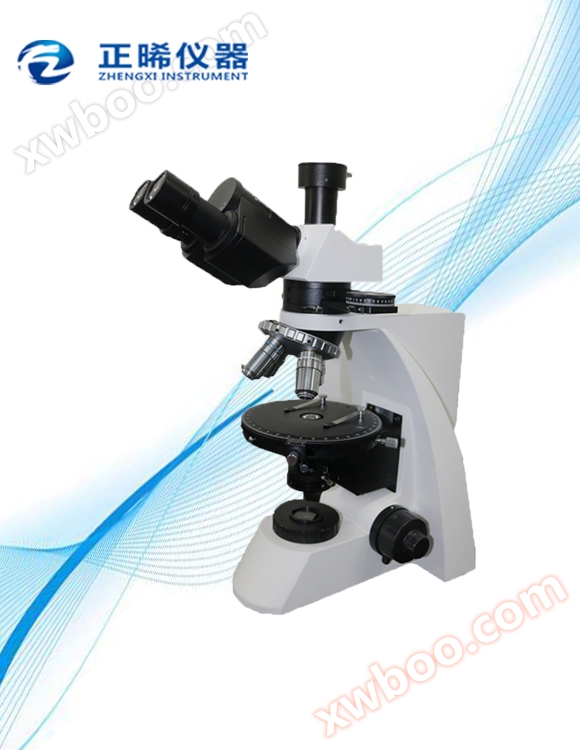
High quality infinite polarization microscope ZXPM-600 reflected light
One Introduction: Polarized microscopes are commonly used to detect certain ordered structures and mirror bodies in living organisms, as well as their
Product details
One Introduction
Polarized microscopes are commonly used to detect certain ordered structures, mirror bodies, and their refractive optical properties within living organisms. They can also be used to detect chemical components in certain tissues. Polarized light microscope is a microscope that inserts a polarizer and a analyzer into the optical system of an optical microscope to examine the anisotropy and birefringence of a sample. Polarizing mirrors and polarizing detectors are both made of Nicol prisms or polarizing plates. The former is installed between the light source and the sample, while the latter is installed between the objective lens and the eyepiece lens or above the eyepiece lens. In biological samples, muscle fibers, bones, and teeth exhibit anisotropy, while starch granules, chromosomes, and spindles exhibit birefringence and are therefore used for chemical studies of tissue cells.
II Scope of application
Polarized light microscope is a commonly used instrument for studying and identifying substances with birefringence using the polarization characteristics of light. WMP-6307 polarized light microscope can be used by a wide range of users for transmission single polarization observation, orthogonal polarization observation, and cone light observation. Polarized vibration microscope is widely used in research and inspection in the fields of geology, chemical engineering, material production, and research and development. It can also observe the crystal phase of liquid polymer materials, biopolymers, and liquid crystal materials. It is a commonly used instrument for research institutions and universities.
III Introduction to polarizing microscope


Online inquiry
-
Contacts
-
Company
-
Telephone
-
Email
-
WeChat
-
Verification Code
-
Message Content
-