
VIP member
Food factory exhaust gas treatment equipment - photoionization composite equipment
Food factory exhaust gas treatment equipment - photoionization composite equipment
Product details
food factoryWaste gas treatment equipment-Optical composite equipment
Keywords: food factory exhaust gas treatment equipment, photoionization composite,
There are three main types of pollution in food processing plants: wastewater, exhaust gas, and solid waste pollution. All three forms of pollution need to be treated and meet the standards before they can be discharged. The main pollutants in the exhaust gas are benzene, toluene, styrene, etc. The purification treatment process is easier to treat compared to wastewater and solid waste, and the technology is relatively more mature. Chaori Purification generally uses spray washing method, UV photolysis method, plasma deodorization and other methods to treat waste gas from food factories. These methods are technically mature, safe and reliable, operate stably with low maintenance costs, have high purification efficiency, and ensure compliance with emission standards.
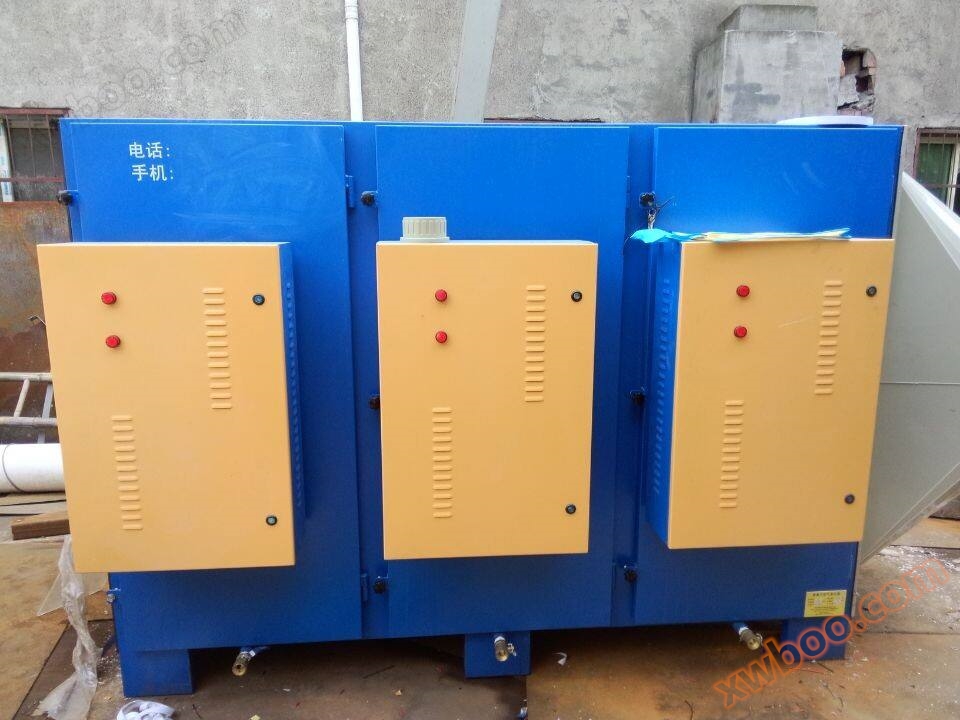
The photoionization composite exhaust gas treatment equipment adopts plasma and ultraviolet catalytic technology, which has the advantages of high purification efficiency, low operating cost, small footprint, and no noise. The exhaust gas purification efficiency is over 95%. The photoionization composite waste gas purifier can purify toxic, harmful, and odorous gases, as well as organic waste gases containing benzene, hydrogen sulfide, ammonia nitrogen, thiols, thioethers, indoles, nitro groups, hydrocarbons, and aldehydes.
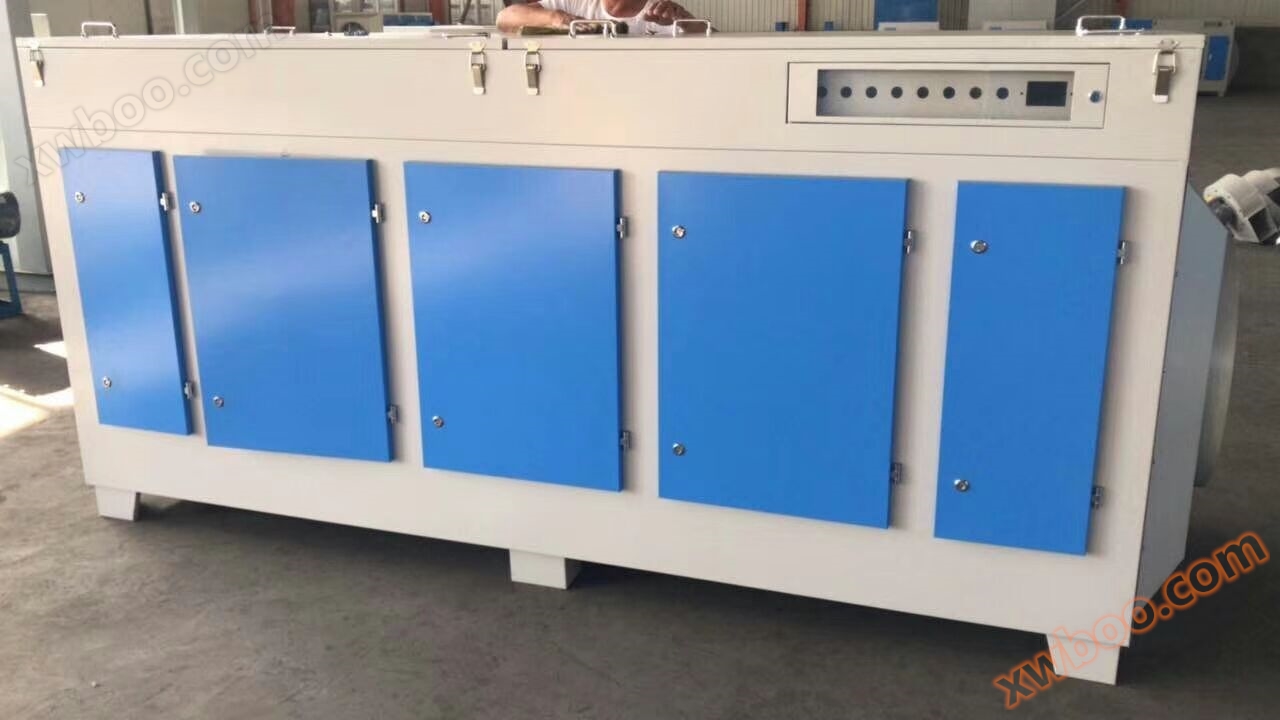
Photoionization composite waste gas treatment equipment
Working principle of photoionization composite waste gas treatment equipment
When the exhaust gas enters the photoionization composite machine, ion chemical reactions occur first, that is, electrons first obtain energy from the electric field, and transfer the energy to molecules or atoms through excitation or ionization. The molecules or atoms that obtain energy are excited, and at the same time, some molecules are ionized, thus becoming active groups.
Active groups collide with molecules (atoms) and between active groups to generate stable products and release thermal energy. Under the action of an external electric field, a large number of energy carrying electrons generated by dielectric discharge bombard pollutant molecules, causing ionization, dissociation, and excitation, and then triggering a series of complex physical and chemical reactions, transforming complex macromolecular pollutants into simple small molecule safe substances, achieving the effect of purifying exhaust gas.
Using high-energy C-band light to break the molecular chains of exhaust gas, changing the molecular structure of exhaust gas, and cracking and oxidizing high molecular weight organic compounds to produce low-molecular-weight harmless substances such as water and carbon dioxide.
Ozone, as a strong catalytic oxidant, can effectively kill bacteria and transform toxic and harmful substances into low molecular weight harmless substances. Stimulate the surface of the catalyst coating with C-band laser to generate activity. Ozone breaks down the molecular bonds of bacteria in odorous gases, destroys their nucleic acid (DNA), and then undergoes strong oxidation reactions through ozone to achieve complete deodorization and sterilization.
Technological advantages of photoionization composite waste gas treatment equipment
1. The processing efficiency is several times higher than other light sources.
2. The equipment occupies a small area and is lightweight.
3. Maintenance free: The overall device has a long service life and does not require specialized manual supervision and maintenance.
4. Energy saving: During the operation of the equipment, only electricity is needed, truly achieving energy conservation and environmental protection.
5. Stability: All components of the machine are made of continuous materials and are suitable for 24-hour uninterrupted operation.
6. Safety: The main circuit has independent space and no safety hazards.
Application scope of photoionization composite waste gas treatment equipment
1. Photoionization composite equipment is mainly used in the chemical industry, paper industry, pharmaceutical industry, food industry, tire and rubber production plants, automobile production, paint spraying, sewage tank treatment, and exhaust gas treatment
2. Odor and odor treatment in various fields such as waste disposal plants, leather industries, printing factories, rubber, spice and seasoning industries, fish meal, feed and livestock farms, pesticide production, and tobacco industry.
Other waste gas treatment equipment and methods:
Spray tower: Spray tower washing method is a common way of treating waste gas in the industry. The equipment takes the shape of a multi-layer tower and consists of a circulating water tank, packing, spray system, defogger, etc. It is commonly used to treat organic waste gas dissolved in water. After entering the equipment through the air inlet, the exhaust gas travels from bottom to top and enters the packing area and spray area in layers. After water treatment, it overflows or is discharged. Spray towers are inexpensive, stable in performance, and aesthetically pleasing in appearance. Ultra solar purification uses fiberglass material with strong anti-corrosion and anti-aging properties, and are widely used in fields such as solar energy, chemical engineering, machinery, and electronic instruments.

UV photolysis: The principle of UV photolysis for treating exhaust gas is to use UV ultraviolet beams to decompose oxygen molecules in the air to produce reactive oxygen species (i.e. free oxygen), and also to produce synergistic photocatalytic oxidation of exhaust gas, degrading odorous gases and converting them into low molecular weight compounds (CO, HO). The treatment method is relatively clean and gentle.

Using UV photolysis to treat exhaust gas has high purification efficiency and strong adaptability, and can achieve deodorization and purification treatment in gases of different concentrations and odors. UV equipment has good operational stability, low cost, low energy consumption, and reduces manual care time, making it a great tool for organic waste gas treatment that saves time, effort, and worry.
Plasma method: Low temperature plasma is the fourth state of matter after solid, liquid, and gas. When the applied voltage reaches the discharge voltage of the gas, the gas is broken down, producing a mixture including electrons, various ions, atoms, and free radicals. During the discharge process, although the electron temperature is high, the temperature of heavy particles is low, and the entire system exhibits a low-temperature state, hence it is called low-temperature plasma. Low temperature plasma degradation of pollutants utilizes the interaction between high-energy electrons, free radicals, and other active particles with pollutants in exhaust gas, causing pollutant molecules to decompose in a very short period of time and undergo various subsequent reactions to achieve the goal of pollutant degradation.
Online inquiry
-
Contacts
-
Company
-
Telephone
-
Email
-
WeChat
-
Verification Code
-
Message Content
-